
Today’s children are growing up in a world very different from what most parents experienced. Smartphones, tablets, AI tools, gaming platforms, and social media are part of everyday childhood. While technology brings learning opportunities and creativity, it also introduces real risks.
That is why digital parenting tips are no longer optional — they are essential life skills for every modern parent.
Many families believe that simply limiting mobile use is enough. But true digital safety requires awareness, communication, smart rules, and consistent monitoring. Parents must actively guide children to build healthy digital habits from an early age.
In this detailed guide, you will learn practical, research-backed digital parenting tips that help protect your child without creating fear or conflict. The goal is not to remove technology from your child’s life — but to teach safe, balanced, and responsible use.
Why Digital Safety Is Critical Today
Before applying Digital Parenting Tips, parents must clearly understand why digital safety has become a serious concern in today’s world. Children are growing up in a technology-driven environment where internet access is unavoidable. Without proper guidance, this early exposure can create long-term risks that affect their development and well-being.
1. Children Are Getting Online Earlier
Children today are introduced to digital devices at a very young age. Even toddlers can swipe screens and open apps. By the age of 8–10, many children already:
Watch YouTube independently
Play online and multiplayer games
Use messaging and chat applications
Access online lessons, assignments, and study materials
When children begin using the internet this early, lack of parental guidance can result in unhealthy screen habits. Early exposure without supervision may lead to screen addiction, reduced attention span, and exposure to inappropriate content. Proper digital guidance from an early age helps children develop responsible and balanced online behavior.
2. The Internet Is Not Designed for Children
The internet is built mainly to increase engagement, not to protect young users. Most platforms use algorithms that promote content based on watch time and clicks, not age suitability. Because of this, children may be exposed to:
Highly addictive content
Violent or unfiltered videos
Inappropriate advertisements
Unrealistic lifestyles and social comparison
This is why parental involvement at home is essential. Monitoring content, enabling parental controls, and teaching safe online behavior can reduce the risks created by unsafe digital platforms.
3. Mental Health Risks Are Increasing
Research worldwide shows a strong connection between excessive screen time and mental health issues in children. Common problems include:
Sleep disturbances due to late-night screen use
Increased anxiety and emotional stress
Attention and focus difficulties
Reduced physical activity and outdoor play
By maintaining healthy screen limits, encouraging offline activities, and keeping open communication, parents can protect both the mental and emotional well-being of their children.
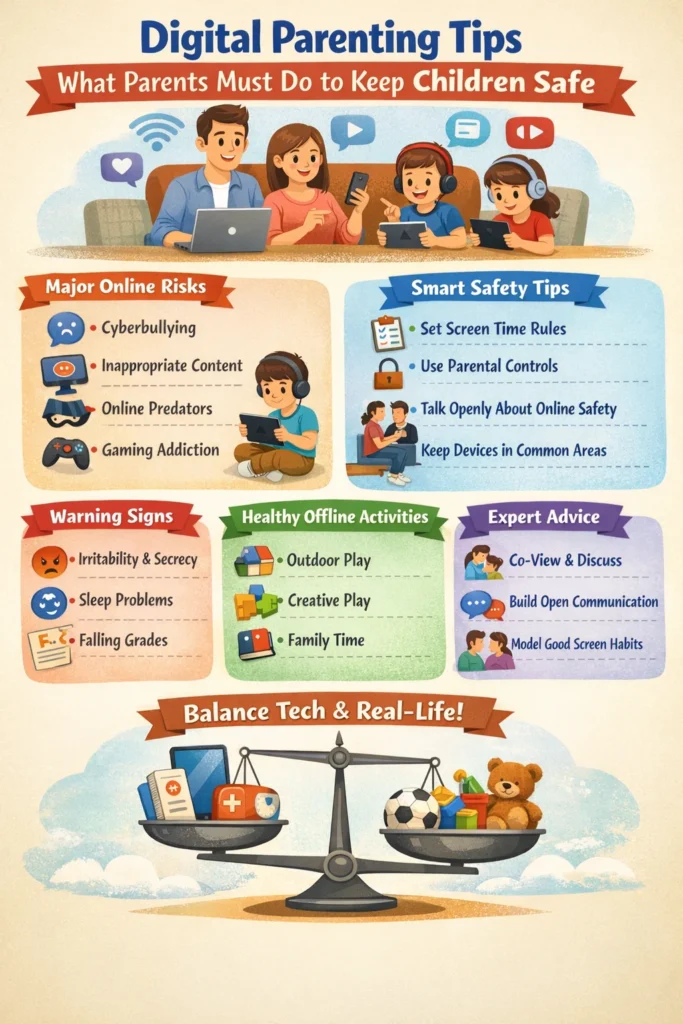
.Major Online Risks Parents Must Understand
To apply effective digital parenting tips, parents must first recognize the main digital dangers children face.
 Cyberbullying
Children may experience:
- Hurtful messages
- Group exclusion
- Public embarrassment
- Anonymous harassment
Good digital parenting tips include teaching children to report and talk openly.
Inappropriate Content Exposure
Even innocent searches can lead to:
- Violent videos
- Adult content
- Misleading information
- Scary or disturbing media
Strong digital parenting tips require filters and supervision.
Online Predators and Privacy Risks
Children sometimes overshare:
- Photos
- School details
- Location
- Personal feelings
Practical digital parenting tips must include privacy education early.
Gaming Addiction
Online games are designed to be highly engaging. Warning signs parents notice without proper digital parenting tips include:
- Irritability when device is removed
- Skipping homework
- Sleep disturbance
- Loss of interest in offline play
Social Media Pressure
Older children especially may struggle with:
- Comparison
- Fear of missing out
- Validation seeking
- Low self-esteem
Balanced digital parenting tips help children build emotional resilience.
Warning Signs of Unhealthy Digital Habits
Many parents search for digital parenting tips only after problems appear. Early detection is key.
Watch for these red flags:
 Behavioral Signs
- Child becomes secretive with devices
- Angry when screen time ends
- Prefers screens over friends
- Sudden mood swings after online use
These indicate the need to strengthen your digital parenting tips immediately.
Physical Signs
- Eye strain
- Poor sleep
- Headaches
- Reduced outdoor activity
Healthy digital parenting tips always include physical well-being checks.
Academic Changes
- Reduced concentration
- Homework delays
- Falling grades
- Short attention span
Effective digital parenting tips balance learning and entertainment use.
Practical Parental Control and Safety Rules
Now let us move into actionable digital parenting tips that every family can implement.
 1. Create a Family Digital Agreement
One of the most powerful digital parenting tips is to set clear rules early.
Include:
- Daily screen time limits
- Allowed apps
- No-device zones
- Bedtime rules
- Online behavior expectations
When children help create the rules, they follow them better.
2. Use Built-In Parental Controls
Modern devices offer strong tools. Smart digital parenting tips recommend using:
- Google Family Link
- Apple Screen Time
- YouTube Kids settings
- Safe search filters
- App download approvals
Technology should support your digital parenting tips, not replace parenting.
3. Keep Devices in Common Areas
Bedroom device use increases risk.
Simple but powerful digital parenting tips include:
- No phones behind closed doors
- Charging devices outside bedroom
- Study-time monitoring
- Living room screen use for younger kids
Visibility naturally improves behavior.
4. Teach Digital Literacy Early
Many parents focus only on restriction. The best digital parenting tips also teach children why safety matters.
Explain in age-appropriate ways:
- Not everything online is true
- Never share personal details
- Ask before downloading apps
- Tell parents if something feels scary
Education is stronger than control alone.
5. Set Healthy Screen Time for Kids
Managing screen time for kids is one of the most searched parenting concerns.
General guidance:
- Under 2 years: minimal screen exposure
- Age 2–5: up to 1 hour supervised
- Age 6–12: consistent daily limits
- Teens: guided independence
Good digital parenting tips focus on quality, not just quantity.
The Importance of Healthy Offline Play
One of the most effective but often ignored digital parenting tips is encouraging meaningful offline engagement.
When children have exciting real-world activities, screen dependence naturally reduces.
Why Offline Play Matters
Healthy offline play:
- Builds creativity
- Improves attention span
- Strengthens motor skills
- Supports emotional regulation
- Reduces digital addiction risk
Parents looking for structured digital parenting tips should always include planned offline time.
For parents exploring age-appropriate educational toys, reliable resources like age-appropriate educational toys can help identify screen-free play options that support learning and development.
(Note: Keep the focus on balanced play rather than replacing all digital use.)
Simple Offline Alternatives That Work
Practical digital parenting tips suggest:
- Building blocks
- Puzzle time
- Drawing and colouring
- Outdoor play
- Story reading
- Pretend play
- Family board games
Consistency is more important than perfection.
Expert Digital Parenting Tips for Modern Families
Here are advanced, research-backed digital parenting tips used by child development experts.
 Tip 1: Co-View Whenever Possible
Instead of only restricting, watch together.
Benefits:
- Understand what your child consumes
- Start meaningful conversations
- Teach critical thinking
- Spot problems early
Co-viewing is one of the most underrated digital parenting tips.
Tip 2: Build Open Communication
Children must feel safe telling parents when something online feels wrong.
Strong digital parenting tips include:
- No overreaction policy
- Regular check-in conversations
- Weekly digital review chats
- Listening without immediate punishment
Fear-free communication prevents hidden problems.
Tip 3: Model Healthy Screen Habits
Children copy adults more than rules.
Powerful digital parenting tips require parents to:
- Avoid constant phone use
- Maintain family no-phone times
- Prioritize face-to-face interaction
- Show balanced work-life device use
Your behavior is your child’s blueprint.
Tip 4: Create Tech-Free Zones
High-impact digital parenting tips include device-free spaces such as:
- Dining table
- Bedroom
- Study time
- Family time
- Morning routine
This builds natural boundaries.
Tip 5: Review Apps Regularly
Many parents forget this step.
Smart digital parenting tips include monthly checks for:
- New downloads
- Chat features
- Hidden browsers
- Gaming purchases
- Privacy settings
Prevention is easier than damage control.
Common Digital Parenting Mistakes Parents Must Avoid
Even caring parents sometimes misapply digital parenting tips. Avoid these common errors.
 Mistake 1: Using Screens as a Babysitter
Occasional use is normal — but constant reliance weakens your digital parenting tips.
Overuse leads to:
- Dependency
- Reduced creativity
- Emotional regulation issues
- Poor sleep
Balance is key.
Mistake 2: Sudden Strict Bans
Extreme restrictions often backfire.
Effective digital parenting tips recommend gradual boundaries rather than sudden bans.
Children who understand why rules exist cooperate better.
Mistake 3: Ignoring Online Friends
Many parents monitor only content, not interactions.
Complete digital parenting tips must include:
- Knowing who children chat with
- Reviewing friend lists
- Discussing online behaviour
- Teaching safe communication
Social risks are real.
Mistake 4: Delaying Digital Education
Waiting until teenage years is too late.
Strong digital parenting tips start as early as:
- Preschool: basic safety
- Primary school: privacy
- Pre-teen: social awareness
- Teen: digital responsibility
Early guidance builds lifelong habits.
Mistake 5: Focusing Only on Screen Time Numbers
Quality matters more than minutes.
Balanced digital parenting tips evaluate:
- Educational value
- Emotional impact
- Interactivity
- Supervision level
- Content type
Not all screen time is equal.
The Future of Kids in the AI and Digital Age
Looking ahead, digital parenting tips will become even more important.
Children will grow up with:
- AI tutors
- Virtual classrooms
- Smart devices
- Augmented reality
- Personalized content algorithms
This makes proactive parenting essential.
What Future-Ready Parents Should Do
Forward-thinking digital parenting tips include:
- Teaching critical thinking
- Building strong offline skills
- Encouraging creativity
- Promoting emotional intelligence
- Maintaining human connection
Technology will evolve — but core parenting values remain constant.
Final Thoughts: Balance Is the Real Goal
Frequently Asked Questions (FAQ)
1. What are the most important digital parenting tips for beginners?
Start with simple rules:
- Set daily screen limits
- Keep devices in common areas
- Talk openly about online safety
- Use parental controls
- Encourage offline play
These foundational digital parenting tips create a strong safety base.
2. How much screen time for kids is considered safe?
Guidelines vary by age, but most experts suggest:
- Under 2 years: very limited
- Age 2–5: about 1 hour supervised
- Age 6–12: consistent daily limits
- Teens: guided and monitored use
Good digital parenting tips focus on both duration and content quality.
3. How can parents protect kids online without being too strict?
Balanced digital parenting tips recommend:
- Open conversations
- Clear family rules
- Gradual independence
- Co-viewing content
- Teaching digital responsibility
Guidance works better than fear-based control.
4. What are the warning signs of screen addiction in children?
Watch for:
- Irritation when device removed
- Sleep problems
- Loss of interest in hobbies
- Secretive behaviour
- Falling academic performance
If noticed, strengthen your digital parenting tips immediately.
5. At what age should digital parenting start?
Experts recommend starting basic digital parenting tips as soon as children begin using screens — often around age 2–3.
Early guidance builds safer long-term habits.
6. Are parental control apps enough to ensure online safety for kids?
No. Tools help, but effective digital parenting tips require:
- Active involvement
- Communication
- Trust building
- Regular monitoring
- Emotional support
Technology supports parenting — it cannot replace it.